Shifts in Mental Disabilities in China Over Time and Compared to Other Countries

Mental disability in China is very much connected to inequalities in socio-economic statuses. One study titled "Effect Modification of Social-context Changes on Mental Disability in China from 1987 to 2006" used data from the China National Sample Survey on Disability to determine the extent of this connection. This research article is found here. This multi-level study examined 1.9 million people and found that mental disabilities almost doubled in both men and women in less than two decades--from 1987 to 2006. The rate of mental disabilities also increased within lower age groups. In addition to older age, work activities in China which were province-specific (e.g. farming and agriculture) lowered the risk of mental disabilities in Chinese women. However, the average annual growth of GDP for China from 1987 to 2006 was 16%, but the average annual growth in the number of health professionals (in all types of care facilities) was only 0.4%, forty times less growth! One possible reason for this minimal growth in the number of health professionals is the distribution of variables within the different provinces of China. The increased risk of mental disabilities in Chinese women are also explained within the context of provinces. The Chinese government, when trying to overcome poor quality of life in both urban and rural settings and its effect on mental disabilities, should consider the inequality amongst its varying provinces and their more common fields of work.
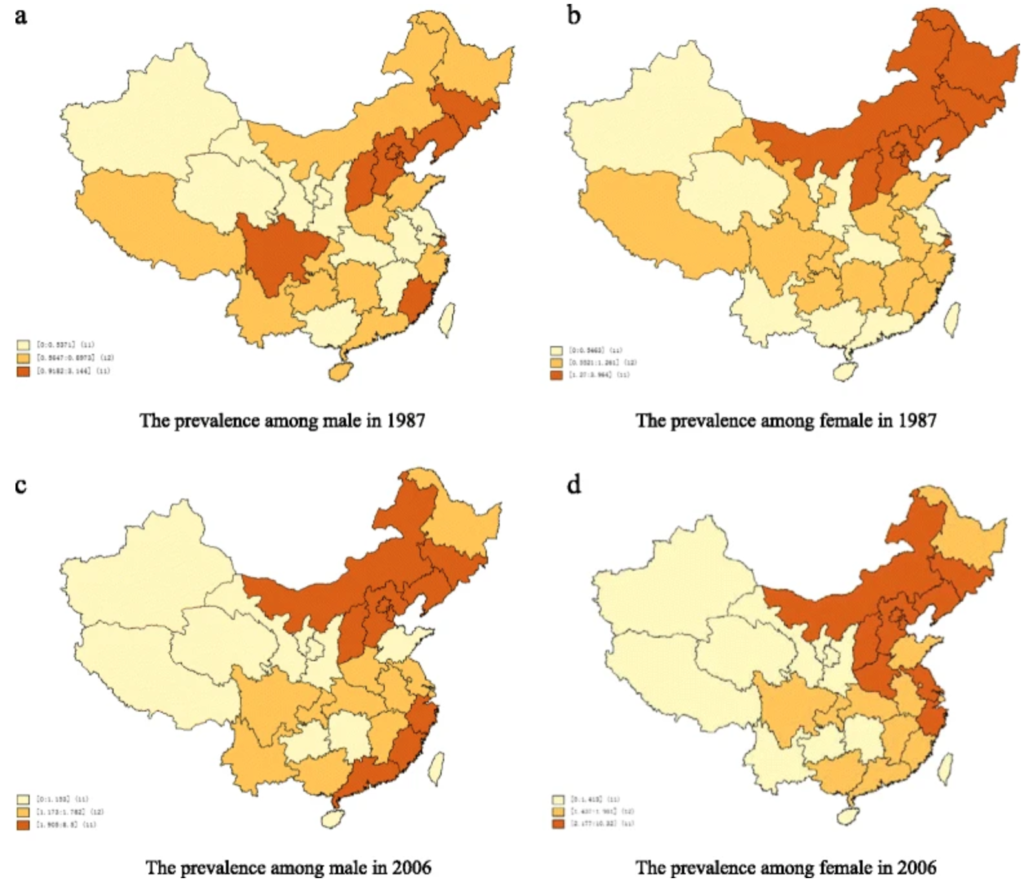
“To face the challenges of mental disability and interprovincial inequality, the Chinese government should adjust its strategies not only for health-care systems but also to correct for inequalities in interprovincial development; this action may help prevent mental disability.”
Wang, Z., Pang, L., Li, N. et al. Effect modification of social-context changes on mental disability in China from 1987 to 2006: a multi-level study of 1.9 million people. BMC Public Health 17, 186 (2017). https://doi.org/10.1186/s12889-017-4066-5
Discrepancies in People with Major Depressive Disorder in Singapore

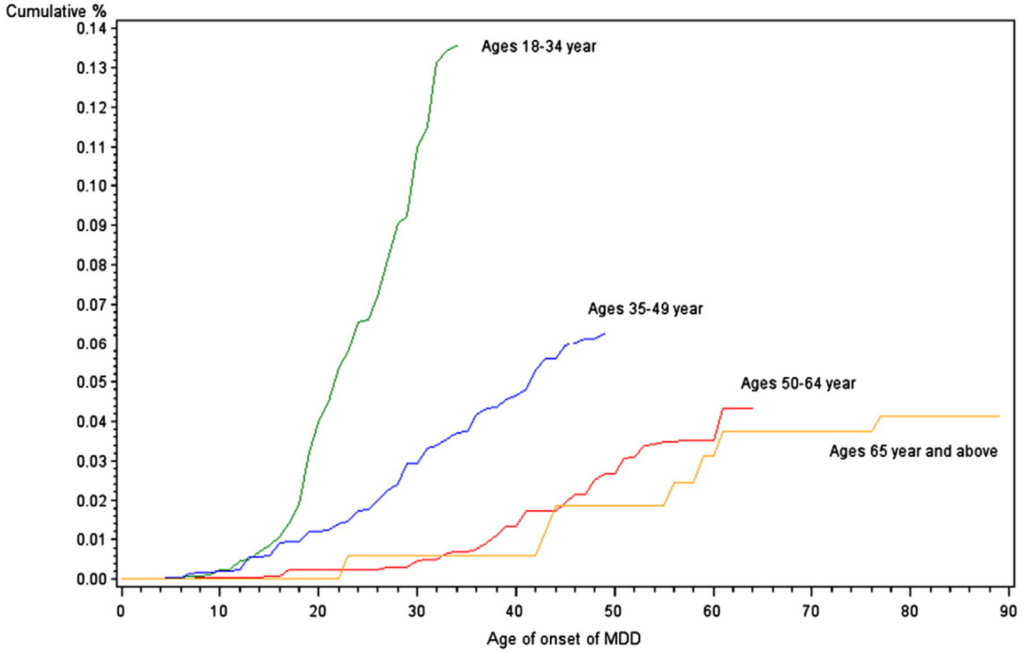
Another cross-sectional study (research article found here), titled "The Prevalence and Impact of Major Depressive Disorder among Chinese, Malays and Indians in an Asian Multi-racial Population," surveyed the multi-ethnic country of Singapore. It was found again that the highest risk of Major Depressive Disorder (MDD) were in people between the ages of 18 and 34, whereas the lowest risk was in people aged 65 years and older (refer to graph below). In this study, Indian residents, who make up 8.7% of the population, were much more likely to have life-long and year-long MDD as compared to Chinese and Malay residents, who comprise 75.6% and 13.6% of the population, respectively. Women also had much higher rates of MDD than men, likely due to "their social and cultural roles in society." Additionally, about half of the people surveyed with MDD had at least one chronic physical illness; it is possible that their depression is one result of the "adverse consequences" of such a physical condition. It is clear here that Major Depressive Disorder is over represented in minorities and discriminated groups (Indians, women, and those with physical impairments). Ironically, however, the article did not survey the socio-economic situations of the participants, but instead went into the financial burdens of those suffering with MDD on their workplaces. Rather than considering treatment for people suffering from this disability and other disabilities (including physical ones) that are associated with MDD, focus is placed on the "impaired role" that such people would have at work. It speaks to the mindset society has on disability that it places people's value on their ability to work rather than their intrinsic value.
Based on the results of the study, “depression impaired role functioning as well as increased days out of role to a substantial degree in our population. The days out of role also increased with the severity of impairment. This has wide social and economic implications. In both America and Canada, depression is main source of disability in the workplace […] — a situation that could potentially be significantly alleviated, as there are cost-effective treatments for depression. Furthermore, it was found that treatment not only leads to reduction of number of days lost but that the economic cost of this reduction was sufficient to offset the cost of treatment.”
Chong, Siow Ann. “The Prevalence and Impact of Major Depressive Disorder among Chinese, Malays and Indians in an Asian Multi-Racial Population.” Science Direct Library, 2011, doi.org/10.1016/j.jad.2011.11.038.
In several literary works both in Eastern and Western society, disability is often used as a metaphorical device to depict evil or dishonesty; other times, it is placed as a metaphorical hurdle for characters to overcome or defeat. In scientific reports and studies, disability is considered a hinderance to society and the exact extent of this is measured by their abilities to work. Both kinds of language here actively deform the individuals in question by reducing them to a level of inferiority. In capitalist societies, people with disabilities are looked down upon because of their inability to achieve the success of other able-bodied individuals, even though the capitalist regime restricts them to do so. In communist societies, people with disabilities are regarded as inferior because they lower the overall perceived success of the community (and the nation, as nationalist countries would believe). Both of these ideologies are clearly very problematic and discriminatory to people with disabilities; and it is ironic that such beliefs actually hinder the success of such people, which only promotes the ideologies further. Rather than taking a personal and humanistic view on people with disabilities, society shames and demeans them in various ways. Disability narratives can be powerful tools to explain the experiences of people with disabilities with them as a subject, not an object, of discussion. After all, taking away the experiences of people with disabilities and focusing on the surface level identities (that is, their disability itself and its consequences) strips the human away from the individual. After taking away their existence and personal identity, what else is truly left left?
Quality of Life of Children with Intellectual Disabilities and their Families in China and the United States

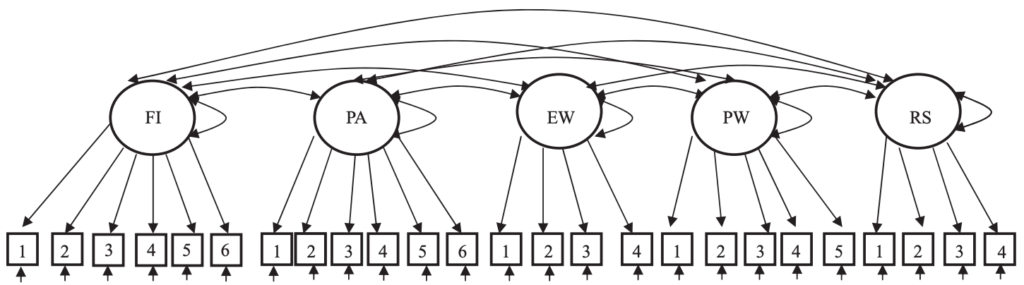
In another study titled "Family Quality of Life of Chinese Families of Children with Intellectual Disabilities" (research article found here), hundreds of Chinese families were assessed using a Family Quality of Life Scale to determine the support and services that these families would need in the future. Perhaps predictably, living conditions including housing and transportation affected the family quality of life (FQOL) because poorer families in poorer living conditions struggled a lot more and were less overall satisfied. It was also found that the the "severity of disability of the child" could predict how satisfied the families' ratings would be, and therefore their overall FQOL. In a previous study, researchers found that "fathers' education level and the adult child's socio-economic status, community types (e.g. urban and rural areas) were significant predictors of QOL [quality of life] of adult children with ID [intellectual disabilities]." Although this provides useful context, studies such as these disregard the entire unit of the family and their FQOL and instead measure only the quality of life on a single individual within the family. This study, however, measures the QOL of every member of the family unit and creates an overall FQOL with several pillars (seen below): family interaction, parenting, emotional well-bing, physical or material well-being, and disability-related support. It was found that Chinese families living in different housing conditions also had "significantly different perceived satisfaction" of the parenting and physical well-being pillars. This was seen especially with families living in crowded and small housing (see quote below). Housing options and assistance with disability should clearly be improved for these families and others as well. The study gives the example of rental policies and reimbursement allowances for families with children with disabilities as one way which can "substantially affect the lives of children with disabilities and their families."
“Living in a very crowed or small apartment can not only have detrimental effect on physical well-being of the family members but also negatively affect parents’ capacity of parenting their children.”
Hu X. et al. Chinese FQOL “Family Quality of Life of Chinese Families of Children with Intellectual Disabilities” Journal of Intellectual Disability Research
A previous 2005 study “found a significant relationship between FQOL and income, depression, child’s age and positive coping among families of children with autism. Another study on the families of children with autism also reported that families in poverty and families from diverse ethnic/racial backgrounds tend to have lower parenting knowledge and family cohesion (Hornstein & McWilliam 2007).”
Hu X. et al. Chinese FQOL “Family Quality of Life of Chinese Families of Children with Intellectual Disabilities” Journal of Intellectual Disability Research
The results of this survey are important for society to understand the ways in which intellectual disabilities affect families and communities. It is just as important, however, for the government to support families with children with disabilities using the information from this survey and others. This study also found cross-cultural factors that can compare the family quality of life from people in the United States and China. These problems are not country-specific, but stem from the same issues that families with members with disabilities face. The difference in income between families in urban and suburban areas reflects the difference in economic growth between the two areas. Chinese migrant or agricultural workers are working on the brink of poverty which of course consequently decreases their quality of life. In general, "the social-economic status of families is a key indicator of family well-being and happiness." Living in poor conditions only enhances other negative affects of an intellectual disability, which lowers overall FQOL. In addition, family income is another significant predictor of the families' satisfaction, further lowering their FQOL. Clearly, both community support and financial support should be given to families with children with intellectual disabilities who live in poverty.
“Based on these findings, we believe that the concept of FQOL needs to be further embraced and promoted in China to help shape public policy as well as empower families to advocate for the rights of their children to social inclusion.”
Hu X. et al. Chinese FQOL “Family Quality of Life of Chinese Families of Children with Intellectual Disabilities” Journal of Intellectual Disability Research
These findings are not limited to China. When compared families of children with disabilities in the United States, the results are consistent. The same five-factor structure is seen across studies and countries, and factors such as family income, living conditions (such as housing and transportation), and the severity of disability all lower the families' quality of life. Although there are cross-cultural factors that change the FQOL between China and the United States, "family-centered service and support" will in both ways help mediate the relationship between families' circumstances and needs and their subsequent FQOL.
Summary of Conclusions from All Three Surveys

Each of these studies provide their own insight and data into the effects that mental and intellectual disabilities have on the individual and the family level, as well as on the multi-racial and cross-cultural level. Studies of depression and other mental disabilities, especially among different Asian ethnic areas, are greatly lacking. It is important to conduct and examine such studies, however, to understand the lives of people living with disabilities and the roles that community and government has to support these people. Mental disabilities have significantly increased over time across countries, particularly amongst the younger generations, in women, and in minority and oppressed groups. Although it is very important to examine the personal experiences of people with disabilities and to discuss the narratives around disability, it is also important to look at the broader picture as well. The socio-economic environment of people with mental and/or intellectual disabilities and their livelihood is extremely important to examine in order to understand the root of such conditions.
